
Paulding County’s Multi-Day Arrest Trail
The Paulding County Sheriff's Office offers no seven-day, ten-day, or thirty-day booking feed. What exists is the Current Inmates portal. That page shows a shifting custody list rather than a historical blotter. Someone held for many days stays visible. Someone released vanishes. An arrest date on the roster helps with timing, yet the page cannot prove that every arrest in a chosen stretch appears there.
Build a broader window from sources with known scope. Start with the roster for present custody. Move to the Sheriff's dated incident releases, then any relevant village archive. Search the court docket next. Request the booking record once an entry rolls off. Slower than a single feed, this method keeps police activity, jail custody, news coverage, and case outcome clearly separated.
How to Read the Paulding Blotter
- Choose a specific date range and record the spelling of the person’s name.
- Check the Sheriff-linked current roster for an arrest date and current-custody entry.
- Search the official Sheriff press-release archive by date or incident context.
- For Payne activity, review the monthly Police Call Report index. For Antwerp, look for attributed village police reports in local coverage.
- Search Paulding County Municipal Court by name or case number, remembering its online data can lag by at least 24 hours or longer.
- For an older or missing item, ask the Sheriff’s records custodian for the booking sheet, jail-register entry, release record, or photograph that already exists.
Reach for 24 Hour Arrests when the only question is current custody after a very recent event. The multi-day method fits catch-up research, not instant confirmation.
Fields Across Paulding Arrest Sources
No single Paulding County log shows every field.
| Source | What it can establish |
|---|---|
| Current-inmate roster | Name, race, sex, age-format birth information, arrest date, mugshot when supplied, and hold reasons. |
| Sheriff press release | Dated, selective narrative about a notable investigation or incident; sometimes arrest or charge context. |
| Payne Police Call Report | Monthly police activity and calls. A call or report is not automatically an arrest or jail booking. |
| Regional news | Story-driven context, attributed statements, and sometimes photographs, but not comprehensive custody data. |
| Court docket | Case number, filings, hearings, and later outcome within the court’s jurisdiction. |
| Sheriff records request | An existing booking sheet, photograph, release item, or jail record, subject to redaction and retention. |
Roster rows list booking charges as filed. Those can change later. Never merge a press account, a roster row, and a court case unless names and dates line up.
Weekend Arrests and Delayed Reports
No Sheriff page promises weekend posting or a set roster-refresh interval. A Friday-night arrest can travel several timelines. Staff handle booking and photography first. The live roster updates on its own schedule. A police report may take days longer, court entries may wait on filing, and holidays stretch these gaps further.
Treat a weekend surge as a search problem, not proof that arrests rose. Check the roster mid-window and note the time. Repeat the check later. Then check the Sheriff archive and court. A person booked and released early may leave no trace on a later roster, so request the record instead of assuming the arrest never happened. The Sheriff's official press-release archive shows its dated, event-driven layout:
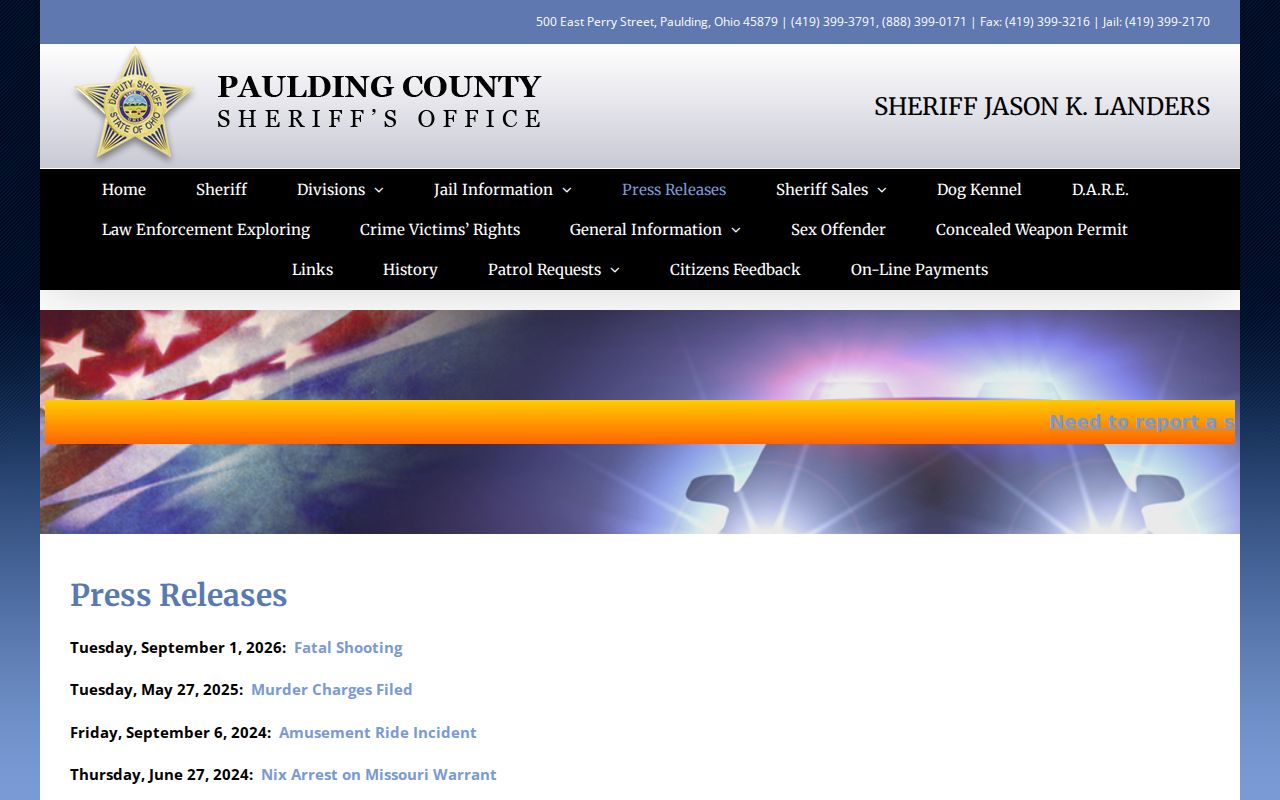
The archive supplies agency context. Still, it is not an all-arrests report.
Payne Police Logs Are Activity Records
Payne offers something rare: annual Police Logs pages with monthly Police Call Report attachments. The archive runs back through prior years. Pages for 2025 and 2026 sit in the index. It works well for pinpointing the month of a reported event. It also reveals the rhythm of village police activity.
The label matters. One call report can hold service calls, contacts, and reports that never became an arrest. It is not a booking-photo feed. Nor does it promise that every attachment names everyone taken to the Paulding County Jail. When a row points to an arrest, confirm booking through the county roster or Sheriff record, then check the court. The official Payne 2026 Police Logs index shows the monthly arrangement:
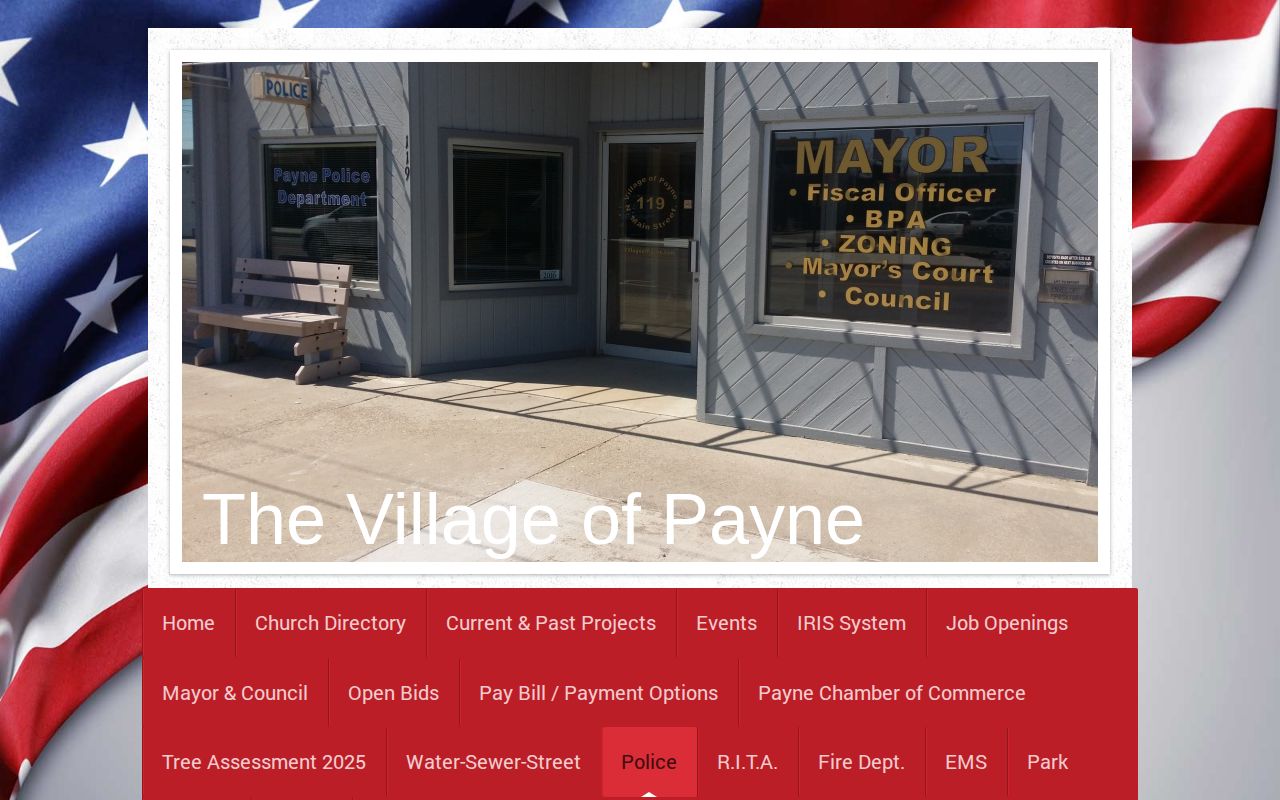
The archive stretches a search past the county's live custody view. It keeps police activity distinct from jail status.
Why News Is Not the Log
The Van Wert Independent and West Bend News sometimes cover Paulding County arrests. Their cadence is editorial, not daily. West Bend News has run Antwerp Village Police Reports naming warrants, arrests, and trips to the county jail. The Van Wert Independent has tied investigations, bookings, bond hearings, and court developments into regional stories. Neither promises a list of every booking. Use the news for leads. Then verify custody with the Sheriff. The court holds the final result, and a routine booking may earn no story at all.
Flock Cameras and Paulding Bookings
A July 2026 Van Wert Independent report on gas-station robberies makes a sharp example. It described a Paulding Police investigation, newly installed Flock cameras, and two bookings into the Paulding County Jail. The camera detail explains investigative context. It is not a roster field. Not every arrest gets either. The regional report's source page shows how one account can link investigation to booking:
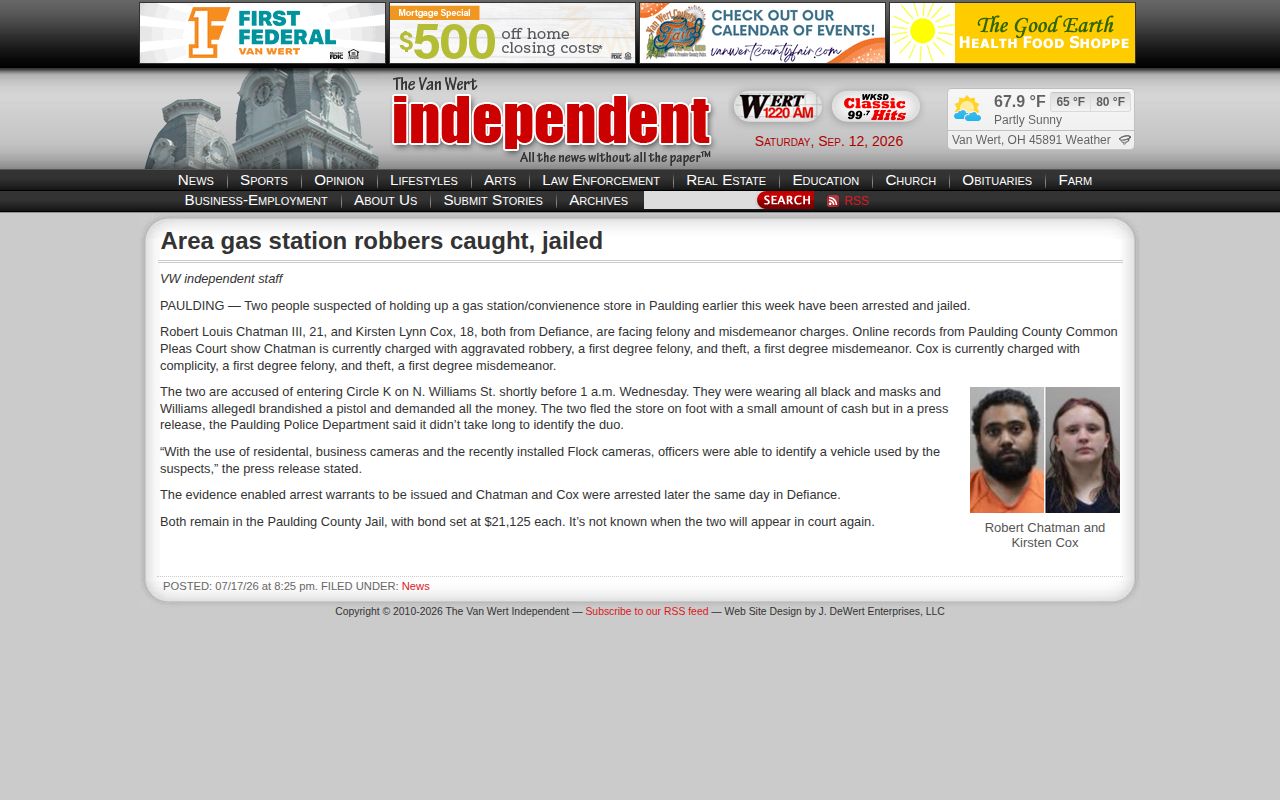
For custody and outcomes, trust the roster and the court.
Official Records Before Third-Party Copies
Plenty of unofficial sites repost Paulding County arrest data. RecentlyBooked, Busted Newspaper, Mugshots Zone, and County Inmate Search are four of them. Their pages can sit stale for weeks. Entries also repeat, run incomplete, or lag behind who has actually been released from jail. Treat them as discovery leads only. Before you trust any name you find there, circle back to the Sheriff's roster or the village police record that started it. Order matters when you check. Start with the Sheriff, then village police material where it applies, then the court docket. News stories and third-party copies come last. A bold headline, a deep page of thumbnails, or an old booking photo says nothing about who sits in the Paulding County jail right now.
Archive a Paulding Booking Record
Booking records live and die on a schedule. In Paulding County, the Sheriff's records policy puts retention, archiving, release, and destruction in the custodian's hands. It lists no fixed number of years for booking sheets or photographs. So ask. Lt. Matt McDougall, reachable at mmcdougall@pcohio.us, can say which approved series covers jail booking records, inmate photographs, releases, incident reports, or roster data. Shape the request tightly. Give a narrow date range, the full name, a booking number if known, and the exact record sought. Ask if the record still sits with the Sheriff. It may have been transferred, or destroyed under an approved schedule. Ohio Revised Code Chapter 341 sketches what a county jail register holds: name, commitment date and cause, and the date and manner of discharge. It promises nothing online.
A transfer calls for two follow-up questions. Where did it go, and under what series name? Ohio History Connection's State Archives and Local Government Records Program explains approved local schedules and transfers, though it holds no digitized Paulding booking-photo collection. Court records go their own way. Pursue them at Municipal or Common Pleas Court. The county's old indexed jail-roster PDF holds visible material from 2013, a former publication method rather than a current archive. Trust live Sheriff navigation over any cached page posing as a multi-day arrest log.
Public Record Search
Sponsored Results